n – prepronominal prefix = specified or completed action / lateral position
n – before vowel, ni – before consonants, and metathesis occurs before ‘h’
The most common function refers to a completed action. It is often translated as it.
n – prepronominal prefix usually occurs with ‘to do’ (advneha) verbs when referring to a past event. The activity is either specified or completed. Another words, it is understood that someone or something is doing something, but the exact nature may not be known.
ᎦᏙ ᎠᏛᏁᎭ / gado advneha / gado aàdvvneha – gado advneha is pronounced g – short a – d – long o short a (held, lowfall tone) – d – nasalized uh (held, rising tone) – n – long a – h – short a. ᎦᏙ ᎠᏛᏁᎭ means who is doing it?
ᎣᏍᏓ ᎿᏛᎦ / osda hnadvga / óósda hnadvvga – ᎣᏍᏓ ᎿᏛᎦ is pronounced long o (held and highfall tone) – s – d – short a aspirated n – short a – d – nasalized uh (held, and lowfall tone) – g – short a. osda hnadvga means you did it well.
n – is used optionally to indicate the person spoken of is in a lateral position with respect to the speaker, or ‘aside’ the speaker.
ᏂᎦᏬᏂᎭ / nigawoniha / nigawoòniha – nigawoniha is pronounced n – short i – g – short a – w – long o (held, lowfall tone) – h – short a. ᏂᎦᏬᏂᎭ means he is speaking (aside the person)
‘already’
n – before vowels, ni – before consonants and metathesis occurs when n – is followed by ‘h.’
Can be attached to a past tense verb form to indicate the action or state expressed has already happened or already in progress prior to some subsequent point of time.
ᏄᎦᎿᏃᎢ / nugahnanoi / nugáahnaanóóʔi – ᏄᎦᎿᏃᎢ is pronounced in English terms n – oo – g – short a (held, high tone) – aspirated n – short a – n – long o (held, highfall tone) – glottal stop – long e. nugahnanoi means it had rained already.
Typically, the n – prepronominal prefix translating to ‘already’ forms a clause in a sentence. It can only stand alone when the time reference has already been provided.
ᏄᎦᎿᏃᎢ ᏩᎩᎷᏣ / nugahnanoi wagilutsa / nugáahnaanóóʔi wágiʔluu(h)ja – nugahnanoi is pronounced in English terms n – oo – g – short a (held and high tone) – aspirated n – short a – n – long o (held and highfall tone) – glottal stop – long e. wagilutsa is pronounced w – short a (high tone) – g – short i – glottal stop – l – oo (held) – aspiration – j – short a. ᏄᎦᎿᏃᎢ ᏩᎩᎷᏣ means it had already rained when I arrived there.
NOTE: the use of n – ‘already’ prepronominal prefix requires the use of the habitual suffix – oi (- oʔi). The verb in the independent clause may itself have the habitual suffix. When that happens, the verb having the n – prepronominal prefix is understood to be habitual.
ᏄᏬᏂᏐᎢ ᏫᏥᎷᎪᎢ / nuwonisoi witsilugoi / nuuwóòniisóóʔi wijíʔluu(h)góoʔi – ᏄᏬᏂᏐᎢ is pronounced in English terms n – oo (held) – w – long o (held, falling tone) – n – short i (held) – s – long o (held, highfall tone) – glottal stop – long e. ᏫᏥᎷᎪᎢ is pronounced w – short i – j – short i (high tone) – glottal stop – l – oo (held) – aspiration – g – long o (held, high tone) – glottal stop – long e. nuwonisoi witsilugoi means I arrive (habitually) there after he has already spoken.
n – prepronominal prefix ‘already’ may be used with the future progressive verb form.
ᏂᎩᏬᏂᏍᎨᏍᏗ / nigawonisgesdi / nigawóòniisgéésdi – nigawonisgesdi is pronounced in English terms n – short i – g – short a – w – long o (held and falling tone) – n – short i (held) – s – g – long a (held and highfall tone) – s – d – long e. ᏂᎩᏬᏂᏍᎨᏍᏗ means he will already by speaking. (it is expected to be at some specified future time)
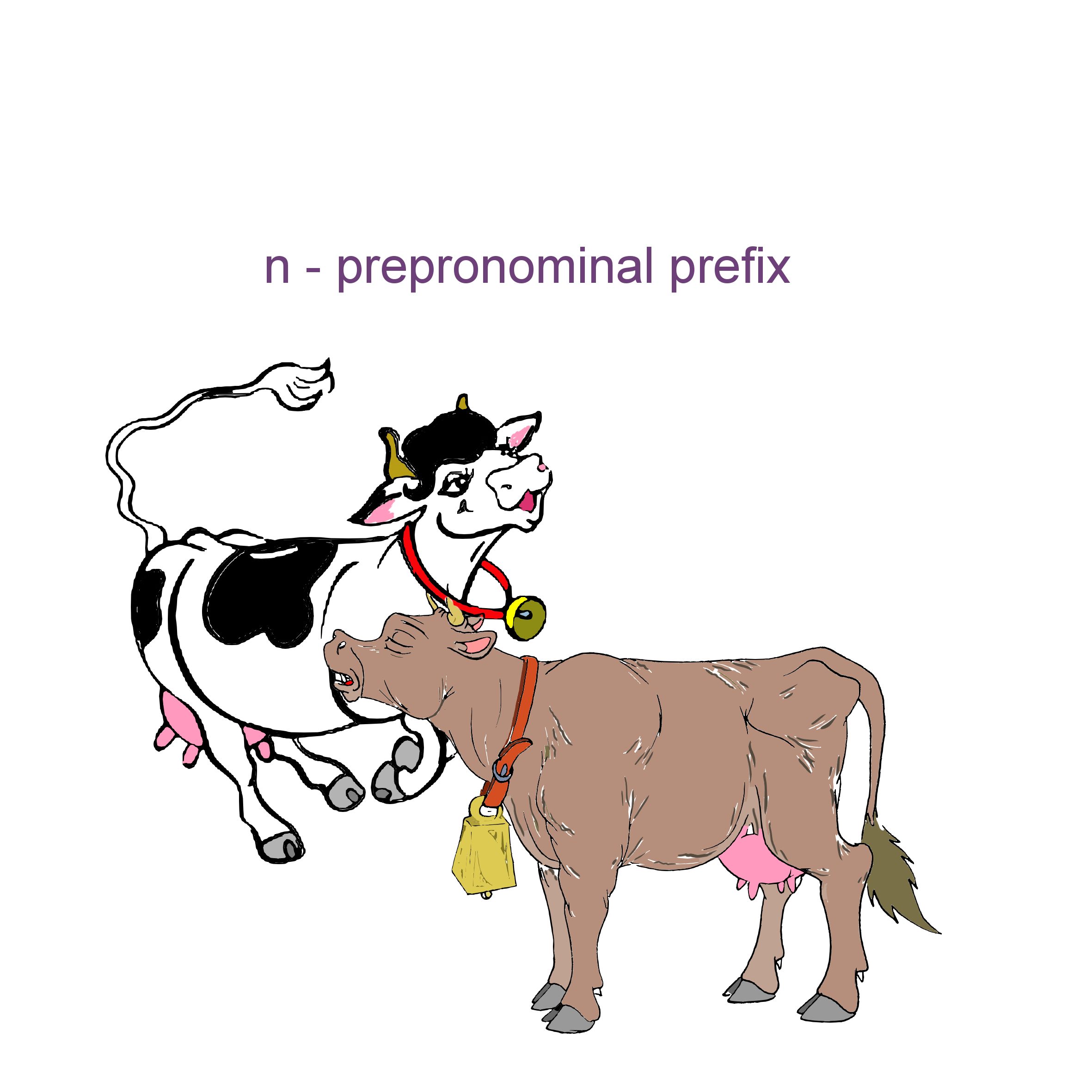
n – prepronominal prefix is frozen on some common occurring verbs. Although, it doesn’t seem to have an absolute function, if left off the verb sounds incorrect and isn’t understood. It is used for happen, become, seem, fix, and to make a sound.
ᏂᎦᎵᏍᏗᏍᎪ / nigalisdisgo / nigal(i)sdiisgo – ᏂᎦᎵᏍᏗᏍᎪ is pronounced n – short i – g – short a – l – s – d – short i (held) – s – g- long o. nigalisdisgo means it happens.
ᏄᎵᏍᏔᎾᎢ / nulistanvi / nuùl(i)stanvvʔi – nulistanvi is pronounced n – oo (held, lowfall tone) – l – s – t – short a – n – nasalized uh (held, rising tone) – glottal stop – long e. ᏄᎵᏍᏔᎾᎢ means he became.
ᏂᎬᏩᏍᏓ / nigvwasda / nigvvw(a)sda – ᏂᎬᏩᏍᏓ is pronounced n – short i – g – nasalized uh (held) – w – s – d – short a. nigvwasda means it seems.
ᎣᏍᏓ ᏄᏩᏁᎶᏅ / osda nuwanelonv / óósda nuuwaneéló(h)nv – osda is pronounced in English terms long o (held, highfall tone) – s – d – short a; nuwanelonv is n – oo (held) – w – short a – n – long a (held, rising tone)- l – long o (high tone) – aspiration – n – nasalized uh. ᎣᏍᏓ ᏄᏩᏁᎶᏅ means fixing it (good).
ᏩᎦ ᏂᎦᏪᎢ / waga nigawei / wa(h)ga nigawéeʔi – ᏩᎦ is pronounced in English terms w – short a – aspiration – g – short a; ᏂᎦᏪᎢ is n – short i – g – short a – w – long a (held, high tone) – glottal stop – long e. waga nigawei means the cow makes a sound (the cow is mooing).
Negation
In some constructions n – prepronominal prefix is used when the suffix – na (negative deverbalizer) to announce negation. It typically means ‘without;’ in English is can be translated as ‘without doing VERB,’ ‘ not having done VERB,’ or ‘before doing VERB.’ One purpose of its use is adverbial, it modifies another verb.
ᏄᏲᏏᏍᎬᎾ / nuyosisgvna / nuuyóòsiisgvvna – nuyosisgvna is pronounced in English terms n – oo (held) – y – long o (held, falling tone) – s – short i (held) – s – g – nasalized uh (held, highfall tone) – n – short a.
ᏄᏲᏏᏍᎬᎾ means he is without / not hungry.
n – prepronominal prefix is used to refer to a specific period that is still continuing on into the present. So, for example, if you are referring to a length of time that is still occurring and has not become a past tense experience, like years…..
ᎯᏍᎩ ᎾᏕᏘᏯ / hisgi nadetiya / hisgi nadeetiy(a) – ᎯᏍᎩ is pronounced in English terms h – short i – s – g – long e; ᎾᏕᏘᏯ is n – short a – d – long a (held) – t – short i – y . hisgi nadetiya means five years. It is understood since, the n prepronominal prefix is used on years, that those years are still continuing.
The n – prepronominal prefix is used with the word hale (almost) to indicate an event that almost took place.
ᎭᎴᏊ ᏂᏓᏋᎨᏫᏍᎪ / halequu nidaquvgewisgo / haléegwu nidaagwvvgweg(i)sgo – halequu is pronounced in English terms h – short a – l – long a (held, rising tone) – gw – oo; nidaquvgewisgo n – short i – d – short a (held) – gw – nasalized uh (held) – gw – long a – g – s – g – long o. ᎭᎴᏊ ᏂᏓᏋᎨᏫᏍᎪ means almost forgot.
Occurs before – da – (motion toward or position facing speaker) prepronominal prefix. Always appears as ni -. It occurs in infinitive forms before – da – (motion toward speaker) and before the – da – form of the – d – (position facing speaker) prepronominal prefixes. The – d – is commonly seen as – di -. There is no specific addition to meaning of the verb, it is simply inserted before the d – prepronominal prefixes in infinitive forms.
ᏂᏓᏳᎪᏩᏛᏗ ᎤᏚᎵᎭ / nidayugowadvdi uduliha / nidayúugow(a)(h)tvv(h)di uùduulíha – nidayugowadvdi is pronounced n – short i – d – short a – y – oo (held, high tone) – g – long o – w – aspiration – t – nasalized uh (held, high tone) – aspiration – d – long e. ᏂᏓᏳᎪᏩᏛᏗ means he sees it (looking this way). uduliha is pronounced oo (held, lowfall tone) – d – oo (held) – l – short i (high tone) – h – short a. ᎤᏚᎵᎭ means he wants it. ᏂᏓᏳᎪᏩᏛᏗ ᎤᏚᎵᎭ means he wants to see it (looking this way).
n – also appears on adjectives for ‘how’ questions when the degree to which a quality exists is questioned.
ᎯᎳ ᏂᎪᏍᏓᏯ ᎯᎠ ᎭᏰᎵᏍᏗ / hila nigosdaya hia hayelisdi / hila nigoósdaàya hiʔa hayel(i)sdi – ᎯᎳ is pronounced h – short i – l – short a. hila means how. ᏂᎪᏍᏓᏯ is pronounced n – short i – g – long o (held and rising tone) – s – d – short a (held and lowfall tone) – y – short a. nigosdaya means sharp. ᎯᎠ is pronounced h – short i – glottal stop – short a. hia means this. ᎭᏰᎵᏍᏗ is pronounces h – short a – y – long a – l – s – d – long e. hayelisdi means knife. hila nigosday his hayelisdi means how sharp is this knife?
To express the idea of ‘every time’ the n – prepronominal prefix is used instead of the irrealis y -, if an action referred to actually did happen.
ᏄᎦᎿᏂᏒ ᎦᎷᎪ / nugahnanisv galugo / nuugaahnaniisv gáʔlu(h)go – nugahnanisv is pronounced n – oo (held) – g – short a (held) – aspirated n – short a – n – short i (held) – s – nasalized uh. ᏄᎦᎿᏂᏒ means it rained. galugo is pronounced g – short a (high tone) – glottal stop – l – oo – aspiration – g – long o. ᎦᎷᎪ means arrived. ᏄᎦᎿᏂᏒ ᎦᎷᎪ means every time it rained, he arrived.
n – prepronominal prefix has a secondary form i – before consonants and iy- before vowels. This is used on infinitive stems and derived forms.
ᎢᏣᏛᏅᏗ ᏣᏁᏝᏔᏁᎢᏍ / itsadvnvdi tsanetlataneis / iijadvv(h)n(v)di jaanehl(a)tanéʔis – ᎢᏣᏛᏅᏗ is pronounced short i (held) – j – short a – d – nasalized uh (held) – aspiration – n – d – long e. itsadvnvdi means you do it. ᏣᏁᏝᏔᏁᎢᏍ is pronounced j – short a (held) – n – long a – aspirated l – t – short a – n – long a (high tone) – glottal stop – short i – s. tsanetlataneis meand you try it. ᎢᏣᏛᏅᏗ ᏣᏁᏝᏔᏁᎢᏍ means did you try to do it?
n – prepronominal prefrix is frozen on many nouns referring to time or quanitity.
ᎢᏧᏕᏘᏴᏓ / itsudetiyvda / ijuudeetiyvvda – itsudetiyvda is pronounced short i – j – oo (held) – d – long a (held) – t – short i – y – nasalized uh (held, highfall tone) – d – short a. ᎢᏧᏕᏘᏴᏓ means years (number of).
ᎢᏳᏟᎶᏓ / iyutliloda / iyuuhliilóóda – ᎢᏳᏟᎶᏓ is pronounced short i – y – oo (held) – aspirated l – short i – l – long o (held and highfall tone) – d – short a. itytliloda means hour.
ᏂᎦᏓ / nigada / nigááda – nigada is pronounced n – short i – g – short a (held, highfall tone) – d – short a. ᏂᎦᏓ means all.
 Bridges Fam Books
Youre so cool! I dont suppose Ive read anything like this before. So good to search out someone with some original thoughts on this subject. realy thanks for beginning this up. this web site is something that is needed on the net, somebody with a little originality. useful job for bringing one thing new to the internet!
LikeLike